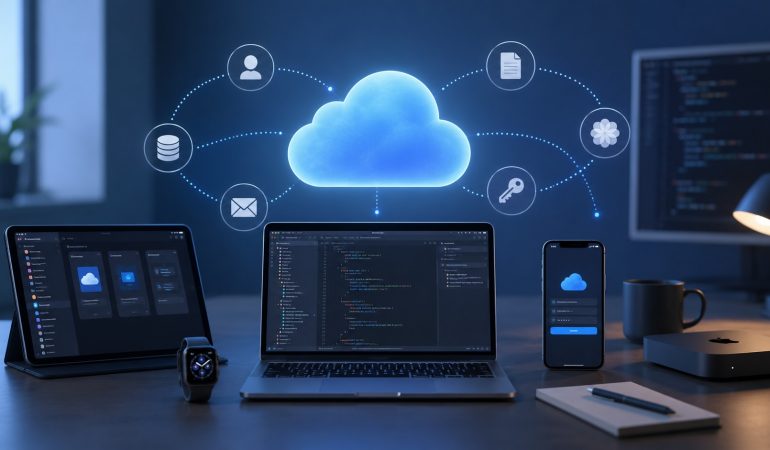
The role of iCloud accounts for developers has become increasingly important as Apple’s ecosystem continues to expand across mobile devices, desktops, wearables, and cloud-connected services. Modern application development rarely occurs in isolation. Instead, developers build software that interacts with user accounts, cloud storage, synchronization services, notifications, authentication systems, and cross-device experiences.
For Apple developers, iCloud sits at the center of many of these workflows. Whether building iPhone applications, testing cloud synchronization, validating user experiences, or managing development environments, iCloud accounts often play a significant role throughout the software development lifecycle.
As Apple’s ecosystem continues growing, understanding how developers utilize iCloud services becomes increasingly valuable for agencies, software teams, startups, and technology professionals.
📑 Table of Contents
- Why Developers Need iCloud Accounts
- iCloud Accounts in App Testing
- Apple Ecosystem Development
- Cloud Synchronization Testing
- Account Authentication Workflows
- Development and Deployment Processes
- Business Applications for Development Teams
- FAQ
- Conclusion
🚀 Why Developers Need iCloud Accounts
When discussing iCloud accounts for developers, the first question is simple: why are they needed?
The answer lies in the architecture of modern software applications.
Today’s users expect applications to provide:
- Cross-device synchronization
- Cloud storage access
- User authentication
- Data backup functionality
- Real-time updates
- Seamless device transitions
Many of these capabilities rely on cloud-connected account systems.
Within Apple’s ecosystem, iCloud frequently serves as the bridge connecting devices, applications, and cloud-based services.
🍎 Understanding Apple’s Connected Ecosystem
Unlike many technology platforms, Apple designs both hardware and software.
This creates a tightly integrated ecosystem that includes:
- iPhone
- iPad
- Mac
- Apple Watch
- Apple TV
- Vision Pro
- iCloud Services
Applications built for these devices often require testing across multiple environments.
Developers use iCloud accounts to validate how applications behave throughout the ecosystem.
📱 User Experience Validation
One of the most important responsibilities of software developers is ensuring a consistent user experience.
Users expect:
- Data synchronization
- Reliable login systems
- Device continuity
- Cloud accessibility
- Stable performance
Testing these experiences often requires multiple account environments.
Many development teams utilize various Apple ID accounts while validating application functionality across different user scenarios.
🧪 iCloud Accounts in Application Testing
Perhaps the most important use of iCloud accounts for developers involves software testing.
Testing helps ensure applications function correctly before public release.
🔬 Testing User Registration Flows
Most modern applications require user registration.
Developers frequently test:
- Account creation
- Email verification
- Password recovery
- User onboarding
- Authentication systems
Testing multiple account scenarios helps identify bugs and improve user experiences.
📧 Email-Based Functionality Testing
Many applications rely heavily on email interactions.
Examples include:
- Verification emails
- Password reset links
- Notification systems
- Security alerts
- User confirmations
Developers often test these workflows using separate account environments to ensure reliability.
⚙️ Quality Assurance Environments
Professional software teams usually maintain dedicated testing environments.
These environments may include:
- Development servers
- Staging systems
- Quality assurance environments
- Beta testing platforms
- Production systems
Each environment may require unique user accounts to accurately simulate real-world scenarios.
🌐 Developing for the Apple Ecosystem
One aspect that makes Apple development unique is ecosystem integration.
Applications often need to function across multiple devices while maintaining a consistent user experience.
📲 Multi-Device Experiences
Modern Apple users frequently switch between:
- iPhone
- iPad
- MacBook
- Apple Watch
Applications must often maintain synchronization throughout these transitions.
iCloud services frequently facilitate this connectivity.
☁️ Cloud-Based Features
Many applications incorporate cloud-based functionality such as:
- File synchronization
- Cloud backups
- Shared content
- Data storage
- Cross-device updates
Developers rely on account testing to ensure these systems perform as intended.
🔄 Cloud Synchronization Testing
Synchronization represents one of the most important features within modern applications.
Users expect information entered on one device to appear automatically on another.
Examples include:
- Notes
- Documents
- Photos
- Preferences
- Application settings
Testing synchronization requires realistic account environments that mimic actual user behavior.
According to Apple’s Developer Documentation, cloud-based synchronization remains a core component of many Apple ecosystem experiences.
🔐 Authentication and Identity Management in Apple Development
Another major reason developers rely on iCloud accounts for developers involves authentication systems. Modern applications must securely identify users while protecting personal information.
Authentication has become one of the most critical components of software architecture because users expect seamless access across devices without compromising security.
👤 User Identity Verification
Most applications require developers to validate how users interact with account systems.
Common authentication scenarios include:
- User registration
- Account login
- Password recovery
- Profile updates
- Session management
- Multi-device access
Developers often use multiple account environments to verify that these systems function correctly under various conditions.
🛡️ Security Testing
Application security remains a top priority for software teams.
Testing often focuses on:
- Unauthorized access prevention
- Authentication validation
- Recovery procedures
- Session security
- Account protection mechanisms
Apple’s ecosystem places significant emphasis on privacy and security, making authentication testing a critical stage of development.
🚀 iCloud Accounts in Development and Deployment Workflows
Building software is only one part of the development process. Deployment and maintenance are equally important.
Many development teams incorporate iCloud-related testing throughout the entire application lifecycle.
📦 Pre-Launch Validation
Before releasing applications, teams often conduct extensive testing that includes:
- Feature validation
- Performance analysis
- User experience reviews
- Synchronization testing
- Cloud integration checks
These processes help reduce issues after launch.
🧪 Beta Testing Programs
Many Apple developers participate in beta testing programs before releasing software publicly.
Beta testing helps identify:
- User interface problems
- Synchronization errors
- Cloud storage issues
- Device compatibility concerns
- Performance bottlenecks
Multiple testing accounts often support these validation efforts.
📱 App Store Preparation
Before applications reach users, development teams must verify:
- Account functionality
- Cloud service integration
- Device compatibility
- User onboarding experiences
- Application stability
Comprehensive testing improves overall product quality and user satisfaction.
🏢 How Development Agencies Use iCloud Accounts
While individual developers frequently use iCloud services, development agencies often have more complex requirements.
Agencies may manage multiple projects simultaneously while serving numerous clients.
👨💼 Multi-Client Development Environments
A software agency might be working on:
- E-commerce applications
- Healthcare platforms
- Educational software
- Business productivity tools
- Consumer mobile apps
Each project may require dedicated testing workflows and account environments.
Many agencies utilize multiple Apple ID when managing development projects across different teams and clients.
📂 Project Separation and Organization
One challenge agencies face is maintaining clear separation between projects.
Organized account structures help support:
- Project management
- Testing environments
- Quality assurance processes
- Documentation systems
- Resource allocation
As agencies grow, these organizational benefits become increasingly valuable.
☁️ iCloud Integration Features Developers Commonly Test
Apple’s ecosystem includes numerous cloud-based capabilities that developers may incorporate into applications.
📂 File Storage Systems
Applications often provide users with access to cloud-stored content.
Developers test:
- File uploads
- File downloads
- Synchronization events
- Version management
- Cross-device accessibility
🔔 Notification Systems
Push notifications remain an important communication channel within applications.
Testing commonly includes:
- Delivery reliability
- Timing accuracy
- User preferences
- Device compatibility
- Notification behavior
🔄 Real-Time Synchronization
Many applications rely on immediate updates between devices.
Developers validate:
- Data consistency
- Synchronization speed
- Error handling
- Conflict resolution
- User experience continuity
These tests help ensure applications behave consistently throughout Apple’s ecosystem.
📈 Why Cloud-Based Development Continues Growing
The software industry increasingly relies on cloud technologies.
Applications today are expected to deliver:
- Anywhere access
- Cross-device functionality
- Real-time updates
- Cloud storage integration
- Collaborative experiences
As these expectations increase, cloud-connected development workflows become even more important.
Apple’s cloud infrastructure continues to support many of these evolving requirements.
🧠 Developer Productivity Benefits
Beyond testing, iCloud services can contribute to developer productivity.
Developers often work across multiple devices and locations.
Cloud-based synchronization supports:
- Code documentation access
- Project file synchronization
- Device continuity
- Team collaboration
- Workflow flexibility
These advantages can help teams maintain efficiency throughout development cycles.
🔮 Future of iCloud Accounts in Software Development
The future of iCloud accounts for developers is closely tied to the broader evolution of cloud computing, artificial intelligence, mobile applications, and connected ecosystems.
Modern software is increasingly cloud-dependent. Users expect seamless experiences regardless of which device they use or where they access their applications.
This shift places cloud-connected account systems at the center of software architecture.
☁️ Growth of Cloud-Native Applications
Many modern applications are now designed as cloud-native solutions.
These applications rely heavily on:
- Cloud storage
- Real-time synchronization
- Remote access
- Cross-device functionality
- Account-based personalization
As cloud-native development continues growing, developers will increasingly depend on robust account testing environments.
🤖 Artificial Intelligence Integration
Artificial intelligence is rapidly becoming part of modern software experiences.
Future applications may incorporate:
- Smart recommendations
- Predictive workflows
- AI-generated content
- Automated personalization
- Intelligent user assistance
Many of these systems will depend on secure account infrastructures and cloud-connected environments.
🌍 Real-World Development Scenarios Using iCloud Accounts
Understanding practical use cases helps illustrate why iCloud accounts for developers remain important.
📱 Scenario 1: Mobile App Development Team
A startup building an iPhone productivity application may need to test:
- User registration systems
- Cloud backups
- Cross-device synchronization
- Push notifications
- User account recovery
Multiple testing accounts help simulate real-world customer interactions.
🏢 Scenario 2: Enterprise Software Provider
A large software company creating enterprise applications for Apple users may require:
- Quality assurance environments
- Beta testing workflows
- Multiple user simulations
- Authentication validation
- Cloud service testing
Structured account systems support these development processes.
🎮 Scenario 3: Gaming Development Studio
Gaming companies frequently develop experiences that depend on:
- Player accounts
- Cloud saves
- Device synchronization
- User progression tracking
- Online features
Testing these systems often requires diverse account environments that mirror actual player behavior.
📊 Key Benefits of iCloud Accounts for Developers
Throughout the software development lifecycle, iCloud accounts support numerous technical and operational objectives.
✅ Development Benefits
- Application testing support
- Cloud integration validation
- User experience testing
- Authentication verification
- Synchronization testing
- Multi-device workflow validation
☑️ Team Benefits
- Project organization
- Development collaboration
- Resource management
- Workflow consistency
- Environment separation
✅ Business Benefits
- Scalable testing infrastructure
- Improved software quality
- Operational efficiency
- Project management support
- Cloud ecosystem integration
Many organizations managing Apple-focused development projects utilize various accounts to support these objectives throughout the software lifecycle.
🏗️ Building Better Apple Applications
Developing successful Apple applications requires more than simply writing code.
Modern development teams must validate:
- User experiences
- Cloud functionality
- Device compatibility
- Performance standards
- Security requirements
- Synchronization reliability
iCloud-related testing helps ensure these elements function correctly before software reaches end users.
📈 Improving User Satisfaction
Applications that provide smooth cloud experiences generally create better user outcomes.
Users appreciate:
- Reliable synchronization
- Fast performance
- Consistent experiences
- Simple account management
- Cross-device continuity
Comprehensive testing contributes directly to these outcomes.
🍎 Why Apple’s Ecosystem Continues Attracting Developers
Apple remains one of the world’s most influential technology platforms.
Developers continue building applications for Apple devices because of:
- Large user base
- Strong ecosystem integration
- Premium customer segments
- Advanced hardware capabilities
- Cloud-connected services
As Apple’s ecosystem expands, development opportunities continue growing.
Cloud services such as iCloud remain an important part of that ecosystem.
❓ Frequently Asked Questions
What are iCloud accounts for developers used for?
iCloud accounts for developers are commonly used for application testing, cloud integration validation, authentication workflows, synchronization testing, and user experience evaluation within Apple’s ecosystem.
Why do developers need multiple Apple ID accounts?
Developers often require multiple testing environments to simulate different user scenarios, validate application behavior, and conduct quality assurance processes.
How do developers test cloud synchronization?
Testing typically involves validating how data moves between devices, ensuring consistency, and confirming that updates appear correctly across connected systems.
Can development agencies benefit from iCloud accounts?
Yes. Agencies frequently manage multiple projects simultaneously and often use structured account systems to support testing, collaboration, and project organization.
How do iCloud accounts help with app testing?
They allow developers to validate registration systems, authentication workflows, cloud functionality, notifications, and synchronization features before software release.
What role does iCloud play in Apple’s ecosystem?
iCloud helps connect Apple devices, applications, and cloud services while supporting synchronization, storage, account management, and user continuity.
Why is cloud testing important in software development?
Cloud testing helps ensure applications perform correctly across devices, maintain data consistency, and provide reliable user experiences.
Do development teams use Apple ID accounts during QA testing?
Yes. Many development teams utilize various Apple ID accounts during quality assurance and software validation processes.
📋 Key Takeaways
- ✅ iCloud accounts play a significant role in Apple-focused software development.
- ✅ Developers use them for testing authentication and registration systems.
- ✅ Cloud synchronization validation is a major use case.
- ✅ Development agencies rely on organized account infrastructures.
- ✅ iCloud supports multi-device testing within Apple’s ecosystem.
- ✅ Cloud-native software continues increasing the importance of account testing.
- ✅ Future technologies such as AI and connected devices will further expand cloud integration requirements.
Developers often require multiple accounts for testing, deployment, and synchronization across Apple’s ecosystem. For application-focused workflows, see iCloud Accounts for App Developers. Teams involved in quality assurance should also review iCloud Accounts for QA Testing to build more comprehensive testing environments.
🏁 Conclusion
The importance of iCloud accounts for developers extends throughout the entire software development lifecycle. From application testing and authentication validation to cloud synchronization and deployment workflows, iCloud-related environments help developers create reliable and user-friendly applications.
As Apple’s ecosystem continues expanding across devices and cloud services, developers face increasing demands to deliver seamless experiences that function consistently everywhere. Meeting these expectations requires thorough testing, structured account management, and reliable cloud integration processes.
Whether building mobile applications, enterprise software, productivity tools, gaming experiences, or cloud-native platforms, development teams frequently rely on account-based testing environments to validate performance and functionality.
Organizations managing Apple-focused development initiatives often evaluate solutions involving Apple ID accounts to support testing infrastructures, quality assurance processes, and software validation workflows. As cloud computing, AI-powered applications, and connected ecosystems continue evolving, iCloud will remain a valuable component of Apple’s development landscape.