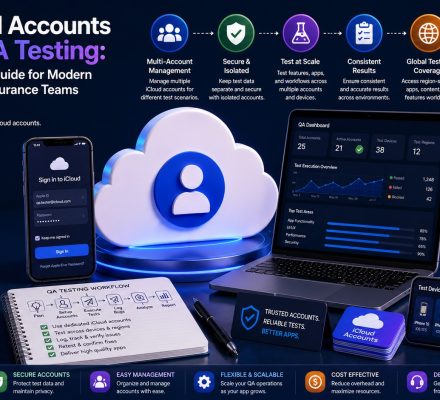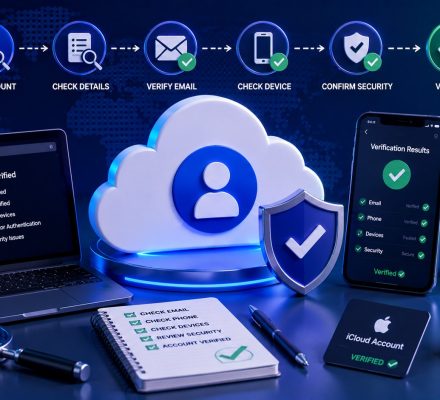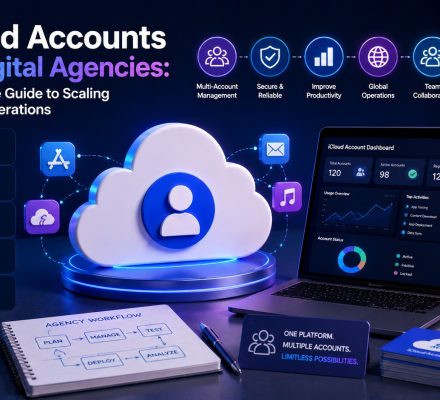
Purchasing iCloud accounts may seem straightforward, but many buyers discover too late that not all accounts are created equal. Whether you’re a 👨💻 developer, 📈 marketer, 🏢 business owner, 🧪 QA tester, or agency managing multiple projects, avoiding common purchasing mistakes can save significant time, money, and operational headaches. The reality is simple:Most account-related problems don’t happen after purchase—they happen because buyers fail to evaluate important factors before purchase. This is why understanding the most common mistakes when buying iCloud accounts is essential.
🚀 Quick Summary
- ✅ Verify account quality before purchase
- ✅ Understand your intended use case
- ✅ Check recovery information policies
- ✅ Avoid suspiciously cheap offers
- ✅ Evaluate long-term scalability
- ✅ Choose reputable providers
Unfortunately, many buyers focus exclusively on price.
While cost matters, experienced users know that factors such as reliability, usability, recovery management, support quality, and account consistency often have a much greater impact on long-term success.
In this guide, we’ll examine the most common buying mistakes, explain why they happen, and show practical ways to avoid them.
📑 Table of Contents
- 🎯 Why Buyers Make Mistakes
- 💸 Mistake #1: Buying Based Only on Price
- 📋 Mistake #2: Not Defining a Use Case
- 🔍 Mistake #3: Ignoring Account Quality Indicators
- 📈 Mistake #4: No Scalability Plan
- ✅ Mistake #5: Skipping Verification Checks
- ⚠️ More Critical Mistakes
- ❓ FAQ
- 🏁 Conclusion
🎯 Why Buyers Make Mistakes
Most purchasing mistakes occur because buyers focus on short-term objectives instead of long-term usability.
For example:
| Buyer Focus | Potential Outcome |
|---|---|
| Lowest Price | Lower quality accounts |
| Fast Purchase | Limited verification |
| No Research | Higher operational risks |
| No Growth Planning | Future scalability issues |
Professional buyers typically evaluate account purchases differently.
Instead of asking:
“What’s the cheapest option?”
They ask:
“Which option creates the fewest operational problems over the next six months?”
This mindset shift alone prevents many common mistakes.
💸 Mistake #1: Buying Based Only on Price
This is by far the most common mistake.
Many buyers assume that all iCloud accounts offer identical value.
As a result, they compare only price.
However, account purchases should be evaluated based on overall quality rather than cost alone.
The cheapest account often becomes the most expensive account if it creates workflow interruptions later.
📊 Price vs Value Comparison
| Factor | Cheap Option | Quality Option |
|---|---|---|
| Consistency | Variable | More Predictable |
| Support | Limited | Typically Better |
| Scalability | May Be Limited | More Flexible |
| Operational Reliability | Unknown | Higher Confidence |
The smartest buyers evaluate value, not just price.
📋 Mistake #2: Not Defining a Use Case Before Buying
Many buyers purchase accounts before deciding exactly how they will be used.
This often leads to mismatched purchasing decisions.
Before purchasing, define:
- 🎯 Primary purpose
- 👥 Number of users
- 📱 Device requirements
- 📈 Future growth expectations
- 🔐 Security considerations
📌 Common Usage Scenarios
| User Type | Primary Requirement |
|---|---|
| Developer | Testing environments |
| Agency | Project organization |
| Business | Operational workflows |
| Marketing Team | Campaign management |
| QA Team | Device testing |
Different goals often require different purchasing strategies.
🔍 Mistake #3: Ignoring Account Quality Indicators
Many buyers never evaluate account quality before purchasing.
This creates avoidable risks.
Important indicators may include:
- 📧 Account consistency
- 📋 Documentation quality
- 🔐 Security practices
- 📞 Provider support
- 📈 Long-term availability
Organizations seeking reliable iCloud account solutions often create evaluation checklists before making purchasing decisions.
✅ Buyer Verification Checklist
| Verification Item | Status |
|---|---|
| Use Case Defined | ☐ |
| Quality Evaluated | ☐ |
| Growth Planned | ☐ |
| Support Reviewed | ☐ |
| Requirements Documented | ☐ |
📈 Mistake #4: No Scalability Plan
Many buyers think only about current needs.
However, projects often grow.
Questions worth asking include:
- 📊 Will account requirements increase?
- 👥 Will more users join the project?
- 📱 Will additional devices be added?
- 📂 Will workflows become more complex?
Planning for growth early helps avoid future migration challenges.
In the next section, we’ll cover verification mistakes, provider evaluation mistakes, support-related issues, recovery considerations, agency purchasing errors, business buying mistakes, and advanced buyer checklists.
✅ Mistake #5: Skipping Verification Checks Before Purchase
One of the most expensive mistakes when buying iCloud accounts is failing to perform basic verification checks.
Many buyers assume every offer is identical and move directly to checkout without evaluating important details.
Professional buyers take a different approach.
They verify requirements, compare options, and assess long-term suitability before making purchasing decisions.
Never evaluate an account offer based solely on the sales page headline. Always assess whether the solution matches your operational requirements.
🔎 What Should Buyers Verify?
| Verification Area | Why It Matters |
|---|---|
| 🎯 Intended Usage | Ensures account suitability |
| 📈 Scalability | Supports future growth |
| 📞 Support Availability | Reduces future issues |
| 📋 Consistency | Improves workflow reliability |
| 🔐 Management Process | Simplifies operations |
The verification stage often takes only a few minutes but can prevent long-term frustrations.
⚠️ Mistake #6: Choosing a Provider Without Evaluating Support
Support is often overlooked until something goes wrong.
Unfortunately, by then it’s usually too late.
Many buyers focus heavily on pricing but never consider what happens after the purchase.
📞 Why Support Matters
Even experienced users occasionally require assistance.
Support quality can influence:
- ⚡ Resolution speed
- 📋 Account management efficiency
- 📈 Scalability planning
- 🔍 Troubleshooting processes
- 🚀 Operational continuity
📊 Support Evaluation Framework
| Question | Importance |
|---|---|
| Is support responsive? | ⭐⭐⭐⭐⭐ |
| Is assistance available after purchase? | ⭐⭐⭐⭐⭐ |
| Can large orders be supported? | ⭐⭐⭐⭐ |
| Is communication clear? | ⭐⭐⭐⭐ |
Professional buyers evaluate support before making commitments.
⚠️ Mistake #7: Ignoring Long-Term Account Management
Many people focus entirely on acquisition and never think about account management.
This becomes problematic as projects grow.
Successful users plan beyond the purchase itself.
📂 Long-Term Management Considerations
- 📋 Documentation systems
- 🔐 Security procedures
- 👥 User assignments
- 📱 Device allocation
- 📈 Growth planning
Without management systems, operational complexity increases rapidly.
Treat account purchases as infrastructure investments rather than one-time transactions.
⚠️ Mistake #8: Not Comparing Multiple Solutions
Another common buyer mistake is selecting the first option encountered.
Experienced buyers compare multiple solutions before making a decision.
Comparison creates context.
Without context, it’s difficult to evaluate value.
📊 Example Comparison Matrix
| Evaluation Factor | Option A | Option B | Option C |
|---|---|---|---|
| Scalability | ⭐⭐⭐ | ⭐⭐⭐⭐ | ⭐⭐⭐⭐⭐ |
| Support | ⭐⭐⭐ | ⭐⭐⭐⭐⭐ | ⭐⭐⭐⭐ |
| Consistency | ⭐⭐⭐ | ⭐⭐⭐⭐ | ⭐⭐⭐⭐⭐ |
| Business Suitability | ⭐⭐⭐ | ⭐⭐⭐⭐ | ⭐⭐⭐⭐⭐ |
Structured comparisons typically lead to better purchasing decisions.
⚠️ Mistake #9: Failing to Match Accounts to Workflow Requirements
Different workflows require different approaches.
A solution that works perfectly for a developer may not be ideal for a marketing agency.
Likewise, enterprise requirements often differ from startup requirements.
📋 Workflow-Based Buying Framework
| User Type | Primary Consideration |
|---|---|
| 👨💻 Developer | Testing efficiency |
| 🧪 QA Team | Device coverage |
| 📈 Marketing Agency | Scalability |
| 🏢 Business | Operational consistency |
| 🚀 Startup | Future growth |
Understanding workflow requirements helps eliminate unnecessary purchases.
⚠️ Mistake #10: Ignoring Industry Best Practices
Many buyers make decisions based on assumptions rather than established practices.
Reviewing guidance from authoritative resources can improve decision-making.
For example:
These resources provide valuable information about account management, security, development workflows, and operational best practices.
🏢 Common Agency Buying Mistakes
Agencies often manage multiple clients simultaneously.
This creates unique purchasing challenges.
❌ Agency Mistake Checklist
| Mistake | Potential Impact |
|---|---|
| No scaling plan | Operational bottlenecks |
| Poor documentation | Management confusion |
| Weak organization | Workflow inefficiencies |
| No inventory tracking | Asset visibility issues |
Agencies that implement structured procurement processes generally experience smoother growth.
Many purchasing mistakes can be avoided by carefully evaluating account quality and verification status before buying. Learn How to Check a Verified iCloud Account to perform proper validation. For a complete overview of the buying process, see our Complete Guide to Buying iCloud Accounts.
🏢 Common Business Buying Mistakes
Businesses frequently underestimate future requirements.
This often leads to repeated purchasing cycles and unnecessary complexity.
📈 Business Growth Planning Table
| Current Need | Future Consideration |
|---|---|
| 10 Accounts | 50 Accounts |
| Single Team | Multiple Teams |
| One Project | Several Projects |
| Simple Workflow | Complex Workflow |
Forward-thinking organizations evaluate both current and future requirements.
Many growing teams eventually adopt dedicated verified iCloud accounts strategies to improve consistency and support long-term scalability.
Others rely on centralized iCloud mail accounts management systems to streamline operations across multiple departments and projects.
🎯 The Smart Buyer’s Pre-Purchase Checklist
| Checklist Item | Status |
|---|---|
| Purpose Defined | ☐ |
| Workflow Evaluated | ☐ |
| Growth Planned | ☐ |
| Support Evaluated | ☐ |
| Quality Reviewed | ☐ |
| Documentation Prepared | ☐ |
| Scalability Considered | ☐ |
In the final section, we’ll cover advanced buyer insights, additional purchasing pitfalls, frequently asked questions, key takeaways, and a complete conclusion on avoiding the most costly mistakes when buying iCloud accounts.
🧠 Advanced Buyer Insights Most People Miss
By the time most buyers learn the lessons covered in this article, they’ve already experienced avoidable problems.
The most successful buyers think differently.
Instead of focusing exclusively on the purchase itself, they evaluate the entire lifecycle of the accounts they intend to use.
This shift in thinking often separates efficient operations from ongoing management headaches.
🎯 Smart Buyer Mindset
Don’t ask:
❌ “What’s the cheapest option available?”
Ask:
✅ “Which solution will support my workflow most effectively over the next 6–12 months?”
📈 Think Beyond Today’s Requirements
Many purchasing decisions are made based on immediate needs.
However, growth often happens faster than expected.
A developer may become an agency owner.
A startup may expand into multiple teams.
A small testing environment may evolve into a large-scale QA operation.
When evaluating purchases, consider:
- 🚀 Expected growth
- 👥 Team expansion
- 📱 Device increases
- 📂 Project diversification
- 🔐 Future management needs
📊 Short-Term Thinking vs Long-Term Thinking
| Approach | Result |
|---|---|
| Buy only for current needs | May require frequent replacements |
| Plan for future scaling | Better operational stability |
| Ignore management processes | Higher complexity later |
| Build systems early | Improved efficiency |
⚠️ Mistake #11: Having No Account Inventory System
This mistake becomes increasingly common as account numbers grow.
At first, tracking a few accounts may seem simple.
But once multiple projects, devices, or team members become involved, documentation becomes essential.
📋 What Should Be Tracked?
| Field | Purpose |
|---|---|
| Account Identifier | Easy referencing |
| Project Assignment | Organization |
| Device Allocation | Asset tracking |
| Owner | Responsibility management |
| Status | Operational visibility |
Organizations managing multiple projects often create centralized documentation systems to prevent confusion.
⚠️ Mistake #12: Buying Without a Standard Operating Procedure (SOP)
Businesses that repeatedly purchase accounts benefit greatly from documented procedures.
Without an SOP, every purchase becomes a new process.
This creates inconsistencies.
A simple procurement workflow might include:
- 📋 Define requirements
- 🔍 Evaluate options
- 📞 Review support availability
- 📈 Assess scalability
- 📂 Document deployment plans
- ✅ Complete acquisition
Standardization improves efficiency and reduces mistakes.
⚠️ Mistake #13: Ignoring Team Collaboration Requirements
Many purchases are made by individuals, but later used by teams.
This creates problems when collaboration requirements were never considered.
👥 Team Planning Checklist
| Question | Reviewed? |
|---|---|
| Will multiple people need access? | ☐ |
| Are management roles defined? | ☐ |
| Is documentation available? | ☐ |
| Is scaling anticipated? | ☐ |
| Are workflows standardized? | ☐ |
Organizations that plan collaboration requirements early often avoid future operational bottlenecks.
⚠️ Mistake #14: Not Evaluating Operational Efficiency
Some purchasing decisions appear economical initially but create hidden operational costs later.
Efficiency should be considered alongside pricing.
📊 Operational Cost Framework
| Factor | Low Efficiency Impact | High Efficiency Impact |
|---|---|---|
| Management Time | Higher | Lower |
| Documentation | Complex | Simple |
| Scalability | Limited | Improved |
| Team Adoption | Slower | Faster |
Smart buyers evaluate the total operational impact—not simply acquisition costs.
⚠️ Mistake #15: Focusing on the Purchase Instead of the Strategy
This is perhaps the biggest mistake of all.
Many people treat account acquisition as a transaction.
Professional organizations treat it as part of a broader operational strategy.
Strategy includes:
- 🎯 Objectives
- 📈 Growth planning
- 👥 Team requirements
- 📂 Organization systems
- 🔐 Security processes
- ⚙️ Workflow optimization
When strategy comes first, purchasing decisions become significantly easier.
🏆 Mistakes vs Best Practices Summary Table
| Common Mistake | Best Practice |
|---|---|
| Buying based only on price | Evaluate overall value |
| No use case defined | Document objectives first |
| Ignoring quality indicators | Use evaluation checklists |
| No scalability planning | Plan future growth |
| Skipping verification | Perform due diligence |
| No documentation | Maintain inventories |
| Poor support evaluation | Review support processes |
| Ignoring workflow fit | Match accounts to needs |
| No SOP | Create standardized procedures |
| Transaction mindset | Strategic mindset |
❓ Frequently Asked Questions
❓ What is the most common mistake when buying iCloud accounts?
The most common mistake is evaluating options based only on price rather than considering quality, support, scalability, and long-term usability.
❓ Why is planning important before purchasing?
Planning helps ensure the purchased accounts align with operational requirements, future growth, and workflow objectives.
❓ How can businesses avoid mistakes when buying iCloud accounts?
Businesses can reduce risk by creating purchasing checklists, evaluating providers carefully, documenting requirements, and planning for future scaling.
❓ Should agencies use a different buying process?
Agencies often benefit from more structured procurement processes because they manage multiple projects, clients, and workflows simultaneously.
❓ Why is scalability important?
Projects frequently grow over time. Planning for expansion helps avoid future disruptions and repeated purchasing cycles.
❓ How many internal stakeholders should be involved in purchasing decisions?
For larger organizations, involving project managers, technical teams, and operations personnel often improves purchasing outcomes.
❓ Are support services important when evaluating solutions?
Yes. Reliable support can significantly improve operational continuity and problem resolution.
❓ What’s the best way to avoid mistakes when buying iCloud accounts?
The best approach is combining planning, verification, documentation, provider evaluation, and long-term strategy development.
✅ Key Takeaways
- 🎯 Define your use case before purchasing.
- 💸 Don’t evaluate options based only on price.
- 📋 Use structured verification checklists.
- 📈 Plan for future growth and scalability.
- 👥 Consider team requirements early.
- 📂 Maintain documentation and inventories.
- 📞 Evaluate support before purchasing.
- ⚙️ Build standardized workflows.
- 🏢 Align purchases with business objectives.
- 🚀 Develop a long-term operational strategy.
📌 Final Buyer Checklist
- ✅ Objectives Defined
- ✅ Quality Evaluated
- ✅ Support Reviewed
- ✅ Growth Planned
- ✅ Documentation Prepared
- ✅ Workflow Compatibility Confirmed
- ✅ Scalability Considered
- ✅ Long-Term Strategy Established
🏁 Conclusion
Most mistakes when buying iCloud accounts are entirely preventable.
They typically occur not because buyers lack technical knowledge, but because they focus on short-term decisions rather than long-term operational success.
The most successful buyers approach purchases strategically. They define objectives, evaluate quality, verify requirements, plan for growth, and implement management systems before problems arise.
Whether you’re a developer building testing environments, an agency managing client operations, or a business scaling digital workflows, thoughtful planning dramatically improves purchasing outcomes.
Organizations looking for dependable iCloud account solutions often benefit from evaluating their requirements thoroughly before selecting a provider.
Many growing teams also standardize procurement around reliable bulk iCloud accounts, verified iCloud accounts, and scalable account management processes to support long-term growth.
Ultimately, smart purchasing is not about finding the cheapest option—it’s about finding the right solution that supports your goals today and continues supporting them tomorrow.