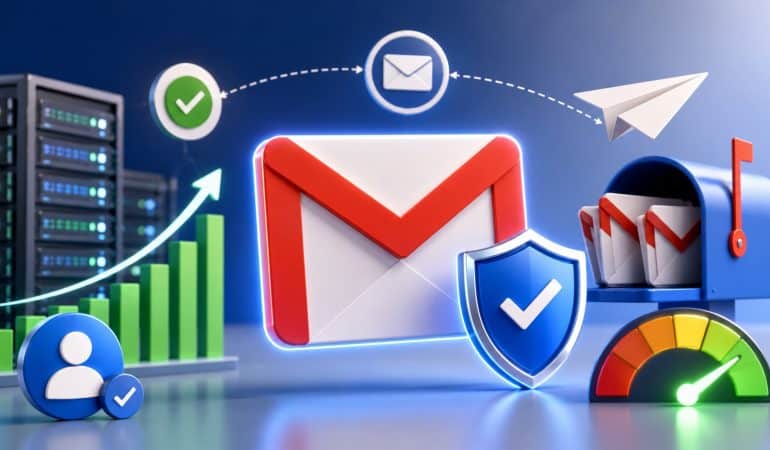
Gmail accounts email deliverability is one of the most critical factors that determines whether your marketing emails actually reach their intended recipients — or quietly disappear into spam folders. If you’ve ever wondered why some email campaigns achieve near-perfect inbox placement while others fail miserably, the answer often comes down to the quality and verification status of the Gmail accounts behind the send. Verified Gmail accounts carry built-in trust signals that email providers, spam filters, and inbox algorithms respect, giving your outreach a significantly higher chance of success.
📡 What Is Email Deliverability and Why It Matters
Email deliverability refers to the ability of an email to successfully reach the recipient’s inbox without being filtered into spam, bounced, or blocked entirely. It’s not just about sending an email — it’s about that email actually being seen. According to Mailchimp’s deliverability research, industry-wide inbox placement rates hover around 80–85%, which means roughly 15–20% of all emails never reach their destination.
For marketers, business owners, and outreach professionals, poor deliverability directly translates to lost revenue and wasted effort. Every email that lands in spam is a missed opportunity. This is exactly why Gmail accounts email deliverability has become such a hot topic — Gmail’s infrastructure is trusted globally, and when used correctly, it dramatically improves inbox placement compared to lesser-known email services.
- ✅ High deliverability = more emails read, more conversions
- ❌ Low deliverability = wasted campaigns, damaged sender reputation
- 📊 Verified accounts consistently outperform unverified ones in inbox placement
- 🔒 Gmail’s reputation as a trusted sender domain gives your emails a head start
🔐 How Gmail Account Verification Affects Deliverability
When a Gmail account is phone-verified, it passes through Google’s identity confirmation process — linking the account to a real, active phone number. This single step creates a chain of trust that filters and spam systems actively look for. Gmail accounts email deliverability improves dramatically with verified accounts because Google’s own systems treat these accounts as legitimate, low-risk senders from day one.
Unverified or freshly created accounts without proper verification often trigger automated red flags. Internet service providers (ISPs) and spam filters evaluate the history, activity patterns, and verification status of sending accounts before deciding where to route incoming mail. A phone-verified Gmail account signals authenticity, which reduces friction in that routing process.
🔑 What Happens During Gmail Phone Verification
- 📱 Google sends a one-time code to a real mobile number
- ✔️ The account becomes associated with a verified identity
- 🛡️ Risk scoring by spam filters is significantly reduced
- 📈 The account gains immediate credibility in Google’s trust hierarchy
- 🔄 Verified accounts are less likely to be flagged or suspended on first use
If you want to experience these benefits from the start, you can Buy Gmail Accounts that are already phone-verified, saving you the setup time and ensuring full deliverability readiness from day one.
🧠 The Role of Account Age in Deliverability
Beyond verification, account age plays a significant role in Gmail accounts email deliverability. Aged Gmail accounts — those that have been active for months or years — carry an established sending history that spam filters recognize as trustworthy. A brand-new account, even if verified, may still face initial deliverability hurdles until it builds a reputation over time. This is why aged, verified Gmail accounts are considered the gold standard for serious email marketing and outreach campaigns.
🛡️ Trust Signals That Verified Gmail Accounts Carry
Spam filters and inbox placement algorithms don’t operate on guesswork — they score incoming emails based on dozens of trust signals. Verified Gmail accounts naturally carry several of these signals, which is why Gmail accounts email deliverability is consistently higher when verified accounts are used. Understanding what these signals are helps you make smarter decisions about the accounts you use for outreach.
| Trust Signal | Verified Gmail Account | Unverified / New Account |
|---|---|---|
| Phone Verification | ✅ Yes | ❌ No |
| Account Age | ✅ Established history | ❌ Zero or minimal history |
| Sending Reputation | ✅ Positive or neutral | ⚠️ Unknown / unproven |
| Spam Complaint Rate | ✅ Low risk | ⚠️ Higher risk |
| Google Trust Score | ✅ Higher baseline | ❌ Lower baseline |
| Recovery Options Linked | ✅ Yes | ❌ Often missing |
| Inbox Placement Rate | ✅ 85–95%+ | ❌ 40–65% |
Each of these trust signals stacks on top of one another. The more signals an account carries, the higher its credibility score — and the more reliably its emails land in inboxes. This is precisely why professionals who Buy Gmail Accounts that are aged and verified see better campaign results compared to those using freshly created accounts.
📊 Verified vs Unverified Gmail Accounts: Side-by-Side Comparison
To understand just how significant the difference is in Gmail accounts email deliverability, it helps to compare the two account types side by side across real-world performance metrics. The gap is not marginal — it’s substantial enough to be the deciding factor in whether a campaign succeeds or fails.
| Metric | Verified Gmail Account | Unverified Gmail Account |
|---|---|---|
| Average Inbox Rate | 88–95% | 45–65% |
| Spam Folder Rate | 3–8% | 25–45% |
| Account Suspension Risk | Low | High |
| Warm-Up Time Needed | Minimal (aged accounts: none) | 2–6 weeks minimum |
| Open Rate Potential | High | Low to medium |
| Best For | Outreach, marketing, campaigns | Personal use, testing only |
📥 How Verified Accounts Boost Inbox Placement Rates
Inbox placement rate (IPR) is the percentage of sent emails that actually land in the primary inbox — not promotions, not spam, not updates — but the main inbox where recipients are most likely to open and engage. For Gmail accounts email deliverability, this metric is where verified accounts genuinely shine.
According to Litmus email research, sender reputation accounts for one of the largest contributing factors to inbox placement. Verified Gmail accounts establish positive sender reputation faster because they’ve already passed identity checks. When ISPs and recipient servers evaluate incoming mail, they look up the sender’s reputation — and a verified Gmail account’s reputation comes pre-established.
🚀 Specific Ways Verification Lifts Inbox Placement
- 📌 Reduces the chance of triggering spam filters on first send
- 📌 Google’s authentication (SPF, DKIM alignment) works more effectively with verified accounts
- 📌 Recipient servers give Gmail domain a higher base trust score
- 📌 Verified accounts have lower bounce rates, which protects overall sender reputation
- 📌 Phone verification reduces bot-association flags from spam detection systems
For marketers running outreach campaigns at scale, even a 10% improvement in inbox placement rate translates to thousands more emails being seen and acted upon. This is why agencies and growth teams consistently choose to Buy Gmail Accounts in bulk rather than create and warm up new accounts from scratch.
🚫 Avoiding Spam Filters With Verified Gmail Accounts
Spam filters in 2026 are significantly more sophisticated than they were even a few years ago. They don’t just scan email content for trigger words — they evaluate the sender’s entire profile, including account verification status, sending patterns, engagement history, and domain reputation. Gmail accounts email deliverability depends heavily on how well your accounts score against these multi-layered filter checks.
Verified Gmail accounts avoid the most common spam filter triggers because they carry authentication by design. Google’s own infrastructure authenticates verified accounts at a higher level, which means when your email travels through various mail transfer agents (MTAs), it arrives with stronger authentication headers. According to Google’s official Gmail spam prevention guidelines, sender authentication is one of the most important factors in inbox delivery.
⚠️ Common Spam Triggers That Verified Accounts Help You Avoid
- 🚩 New account with no sending history — verified accounts bypass this flag
- 🚩 Missing or incomplete account profile — verified accounts are fully set up
- 🚩 No recovery options linked — verification adds phone recovery automatically
- 🚩 Sudden high-volume sending from a cold account — aged verified accounts have established baselines
- 🚩 IP reputation issues — Gmail’s shared infrastructure benefits all verified account holders
✅ Best Practices for Maximizing Gmail Deliverability
Even with verified accounts, following best practices ensures you maintain strong Gmail accounts email deliverability over the long term. Verification gives you a strong starting position, but how you use your accounts determines whether that position holds.
📋 Warm-Up Strategy (For New Verified Accounts)
- 📅 Start with 20–30 emails per day in week one
- 📅 Gradually increase volume by 30–40% each week
- 📅 Mix outreach emails with normal conversational sends
- 📅 Ensure early sends get opens and replies to build engagement signals
- 📅 Avoid sending to large unverified or purchased contact lists initially
🔧 Technical Setup Checklist
- ⚙️ Set up SPF records for your sending domain
- ⚙️ Configure DKIM signing for all outbound mail
- ⚙️ Enable DMARC policy to prevent spoofing
- ⚙️ Use a dedicated sending IP where possible
- ⚙️ Monitor bounce rates and unsubscribe rates closely
- ⚙️ Regularly clean your email list to remove inactive or invalid addresses
📊 Monitoring and Maintenance
Ongoing monitoring is essential to sustaining high Gmail accounts email deliverability. Track your open rates, click rates, bounce rates, and spam complaint rates weekly. Tools like Google Postmaster Tools give you direct insight into how Gmail perceives your sending domain and account reputation. If you notice a sudden drop in open rates, that’s often an early warning sign of deliverability issues that need to be addressed before they worsen.
When scaling your outreach, the smartest move is to rotate multiple verified accounts to avoid hitting sending limits on any single account. Many serious marketers Buy Gmail Accounts in batches precisely for this rotation strategy, ensuring no single account bears the full sending load.
Verified accounts are only part of the equation — proper warm-up is equally critical. Follow our Gmail Account Warm-Up Guide for Marketers to prepare your accounts before launching campaigns. You can also learn how to check whether a Gmail account is phone verified to ensure your accounts meet platform requirements. For outreach use cases specifically, see our guide on Gmail accounts for outreach campaigns.
❓ Frequently Asked Questions
🔍 What does “phone verified” mean for a Gmail account?
Google verifies a Gmail account when the user confirms it with a real, active mobile phone number during the registration process. To complete setup, the user must enter a one-time verification code that Google sends to the phone. This verification process strengthens the account’s credibility and helps reduce its risk score during spam-filter evaluations. Both Google’s systems and third-party email filtering tools generally view phone-verified accounts as more trustworthy. As a result, phone-verified accounts often achieve stronger email deliverability than accounts created without phone verification.
🔍 How much does verification actually improve inbox placement rates?
The improvement can be substantial — studies and industry data suggest that verified accounts can achieve inbox placement rates of 85–95%, compared to 45–65% for unverified accounts. That’s a potential difference of 30–40 percentage points, which at scale represents thousands of additional emails reaching their destination. Gmail accounts email deliverability improvements from verification are compounded further when the accounts are also aged, meaning they have an established sending history. The combination of verification and account age provides the strongest possible deliverability foundation.
🔍 Can I use verified Gmail accounts for cold email outreach?
Yes, verified Gmail accounts are widely used for cold email outreach campaigns. Their trusted sender status makes them far more suitable for outreach than unverified accounts. However, it’s important to still follow warm-up practices, maintain reasonable sending volumes, and ensure your email content complies with CAN-SPAM and GDPR regulations. Even the best verified accounts can develop deliverability issues if they’re used for spam-like sending patterns. Rotating multiple verified accounts across your campaigns is the best way to maintain consistent performance.
🔍 How does account age combine with verification for better deliverability?
Account age and verification are complementary factors — together they create a much stronger deliverability profile than either factor alone. An aged account has an established sending history, positive engagement patterns, and an existing reputation score with ISPs and spam filters. A phone-verified account combines the trust of identity confirmation with the credibility of an established track record. Because of these advantages, professional marketers and outreach teams consistently prefer aged, verified Gmail accounts over fresh accounts, including newly verified ones.
🔍 Do verified Gmail accounts work better with email automation tools?
Verified Gmail accounts generally integrate more smoothly with email automation tools like Instantly, Lemlist, Mailshake, and similar platforms. These tools often have built-in checks that flag unverified or low-reputation accounts, and using verified accounts reduces the likelihood of your campaigns being paused or flagged by the platform itself. Gmail accounts email deliverability through automation tools depends on both the account quality and the tool’s sending infrastructure, so starting with verified accounts gives you the best possible baseline. Many automation platforms even recommend using aged, verified Gmail accounts in their onboarding guides for exactly this reason.
🔍 What happens if I use unverified Gmail accounts for marketing?
Using unverified Gmail accounts for marketing campaigns carries significant risks. Spam filters are more likely to route your emails to the spam folder, dramatically reducing your open rates and overall campaign effectiveness. Unverified accounts also face a higher risk of being suspended by Google, especially when used for high-volume sending. The resulting damage to your sender reputation can be difficult to recover from and may affect other accounts and domains you use in the future. Starting with verified accounts is always the safer and more effective approach for any serious marketing operation.
🔍 How many Gmail accounts should I use for an outreach campaign?
The number of Gmail accounts needed depends on your daily email volume targets. A single verified Gmail account can safely send 50–100 emails per day once properly warmed up. If you need to send 500 emails daily, you’d want at least 5–10 verified accounts in rotation. For larger campaigns targeting 1,000+ emails per day, using 15–20 verified accounts spread across different sending schedules is advisable. Distributing volume across multiple accounts protects each account’s reputation and ensures consistent Gmail accounts email deliverability across your entire campaign infrastructure.
🔍 Where can I get phone-verified Gmail accounts that are ready for outreach?
You can source phone-verified Gmail accounts from reputable providers who specialize in aged, verified accounts built for marketing and outreach use cases. Choose a provider that offers genuinely phone-verified accounts, maintains account age and activity history, and backs its services with replacement guarantees. Avoid providers offering extremely cheap bulk accounts without verification details, as these often fail quickly and damage your sender reputation. A reliable source will provide accounts with clear verification details and consistent delivery performance from day one.
🏁 Conclusion
The relationship between verified Gmail accounts and email deliverability is clear and well-documented. Phone-verified, aged, and properly maintained Gmail accounts fundamentally improve email deliverability and help businesses achieve better inbox placement.
From higher inbox placement rates to reduced spam filter triggers and more stable sending reputations, verified accounts provide the foundation that serious email marketing campaigns require.
Whether you’re running cold outreach, managing marketing campaigns, or coordinating multi-account automation workflows, starting with verified Gmail accounts is not optional — it’s essential. The difference between a campaign that converts and one that disappears into spam folders often comes down to the quality and verification status of the accounts you’re using.
If you’re ready to take your email campaigns to the next level with accounts that are built for performance, you can Buy Gmail Accounts that are phone-verified, aged, and ready to deploy — giving your outreach the deliverability advantage it deserves from the very first send.