Modern software testing has become significantly more complex than it was just a few years ago. Today’s QA teams must validate applications across multiple devices, operating system versions, user states, synchronization scenarios, onboarding workflows, and real-world environments. For organizations building products within Apple’s ecosystem, iCloud accounts for software testing have become an essential part of creating realistic and repeatable testing environments.
Whether you’re managing a startup QA team, an enterprise testing department, a mobile app company, or a dedicated device lab, properly structured iCloud testing environments can dramatically improve testing coverage, reduce bugs, and help teams identify issues before users encounter them.
🚀 Quick Overview
- 🧪 QA teams use iCloud accounts to simulate real user environments.
- 📱 Device testing often requires multiple account scenarios.
- ☁️ Synchronization validation depends on realistic account setups.
- 👥 Large testing teams benefit from organized account inventories.
- 📈 Scalable account management improves testing efficiency.
According to resources available through Apple Developer, comprehensive testing should cover diverse user scenarios, device states, and operational conditions. Teams that build structured account testing environments are often better positioned to identify usability and synchronization issues before release.
This guide explores how modern QA teams use iCloud accounts, why testing environments matter, how large organizations manage testing infrastructure, and what practices can help improve software quality.
📑 Table of Contents
- 🧪 Why Testing Teams Need iCloud Accounts
- 📱 Modern Software Testing Challenges
- ☁️ Understanding iCloud Testing Environments
- 📈 Benefits for QA Workflows
- 🔍 Common Testing Scenarios
- 🏢 Device Lab Management
- 👥 Testing Team Structures
- 🚀 Advanced Testing Workflows
- ❓ FAQ
- 🏁 Conclusion
🧪 Why Testing Teams Need iCloud Accounts
Testing teams rarely evaluate software in isolation.
Applications interact with cloud services, user data, device settings, authentication systems, and synchronization frameworks.
As a result, testers need realistic account environments that reflect actual user behavior.
This is where iCloud-based testing environments become valuable.
📋 Key Reasons QA Teams Use Testing Accounts
- 📱 Device synchronization testing
- ☁️ Cloud data validation
- 🔐 Authentication workflows
- 📂 User profile simulation
- 🧪 Multi-device scenario testing
- 📈 Regression testing
- 🚀 Beta testing environments
📊 Software Testing Requirements Matrix
| Testing Area | Account Requirement |
|---|---|
| Authentication | User account simulation |
| Cloud Sync | Active iCloud environment |
| Device Migration | Multi-device accounts |
| User Onboarding | Fresh account testing |
| Long-Term Usage | Mature account scenarios |
Without realistic accounts, many testing workflows become incomplete or less representative of actual user experiences.
Build testing environments that closely mirror how real customers interact with your application rather than relying solely on isolated development accounts.
📱 Modern Software Testing Challenges
Software testing has evolved significantly.
Applications now operate across multiple devices, cloud environments, and user states simultaneously.
Testing teams must validate far more than basic functionality.
⚠️ Common QA Challenges
| Challenge | Impact |
|---|---|
| Cross-device behavior | Complex validation requirements |
| Cloud synchronization | More testing variables |
| User migrations | Additional workflows |
| Beta deployments | Broader coverage needed |
| Multiple OS versions | Expanded test matrix |
Testing frameworks discussed within Apple Documentation and deployment workflows involving TestFlight frequently emphasize validating applications across a variety of user environments.
This is one reason many organizations maintain multiple account inventories.
☁️ Understanding iCloud Testing Environments
An iCloud testing environment is more than a collection of accounts.
It represents a structured ecosystem that allows testers to reproduce user journeys consistently.
These environments help teams validate how applications behave under different account conditions.
📂 Typical Components of a Testing Environment
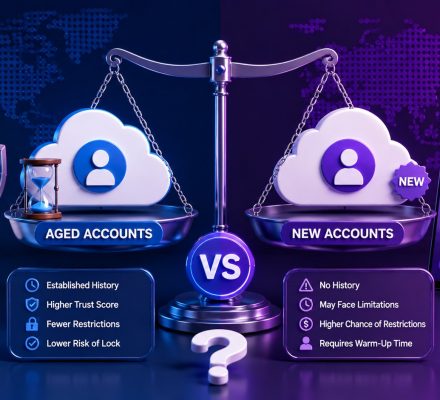
- 👤 New-user accounts
- 📅 Aged-user accounts
- 📱 Multiple device profiles
- ☁️ Synchronization datasets
- 🔐 Authentication scenarios
- 📈 Production-like workflows
📊 Testing Environment Structure
| Environment Layer | Purpose |
|---|---|
| User Accounts | Identity simulation |
| Devices | Hardware testing |
| Cloud Services | Synchronization validation |
| Applications | Functional testing |
| Data Sets | Scenario simulation |
Organizations building larger testing infrastructures often maintain dedicated bulk iCloud accounts inventories to support multiple test environments simultaneously.
📈 Benefits of iCloud Accounts for QA Workflows
When implemented correctly, testing accounts can significantly improve QA efficiency.
They help create repeatable, scalable testing processes that reduce uncertainty.
🚀 Major Benefits
- 🧪 Improved testing coverage
- 📱 Better device validation
- ☁️ Realistic synchronization testing
- 👥 Enhanced team collaboration
- 📈 Faster issue discovery
- 🔄 Repeatable testing processes
📊 QA Impact Comparison
| Area | Limited Accounts | Structured Account Inventory |
|---|---|---|
| Testing Coverage | Lower | Higher |
| User Simulation | Basic | Advanced |
| Workflow Consistency | Variable | Standardized |
| Issue Discovery | Limited | Broader |
Teams using structured environments often discover edge cases that would otherwise remain hidden until production.
🔍 Common Testing Scenarios That Require Multiple Accounts
Not all testing scenarios are created equal.
Different objectives require different account configurations.
📋 Typical Scenarios
| Scenario | Account Type Needed |
|---|---|
| First-Time User Experience | Fresh Account |
| Returning User Testing | Aged Account |
| Multi-Device Sync | Shared Environment |
| Beta Validation | Dedicated Test Accounts |
| Migration Testing | Mixed Accounts |
Development teams frequently use tools such as Xcode, GitHub, and Firebase Documentation alongside testing accounts to create comprehensive validation workflows.
💡 Team Workflow TipAssign specific account groups to specific testing objectives. This reduces confusion and improves repeatability across testing cycles.
🏢 Managing Device Labs with Dedicated Account Pools
As organizations scale, managing testing devices becomes increasingly complex.
Many QA departments operate internal device labs containing dozens—or even hundreds—of Apple devices.
Without organized account allocation systems, testing efficiency quickly declines.
📊 Device Lab Management Framework
| Component | Purpose |
|---|---|
| Device Inventory | Hardware tracking |
| Account Inventory | User simulation |
| Test Plans | Workflow consistency |
| Data Sets | Scenario coverage |
| Reporting | Issue documentation |
Many organizations standardize around iCloud testing accounts and dedicated account pools to simplify management across large device inventories.
👥 How Modern Software Testing Teams Structure Account Management
As QA teams grow, account management becomes an operational challenge rather than a technical one.
A small startup might manage five to ten testing accounts manually. However, enterprise testing departments often maintain hundreds of accounts across multiple projects, environments, and device groups.
Without structure, testers waste time searching for accounts, resetting environments, and troubleshooting inconsistencies.
Treat testing accounts as infrastructure assets, just like testing devices, automation tools, and source code repositories.
📊 Typical QA Team Account Structure
| Account Group | Purpose |
|---|---|
| 🆕 Fresh Accounts | Onboarding validation |
| 📅 Mature Accounts | Long-term user simulation |
| 📱 Device-Specific Accounts | Hardware testing |
| 🧪 Beta Accounts | Pre-release testing |
| ⚙️ Automation Accounts | Automated test execution |
This structured approach improves consistency and reduces testing bottlenecks.
🔄 Regression Testing and Account-Based Validation
Regression testing is one of the most important activities in software quality assurance.
Every software update has the potential to affect previously working functionality.
This becomes even more critical when applications interact with cloud services and user accounts.
📋 Why Regression Testing Requires Multiple Accounts
- ☁️ Cloud synchronization behavior changes
- 📱 Device compatibility issues
- 🔐 Authentication updates
- 📂 Data migration workflows
- 👤 User profile differences
According to guidance found throughout Apple Documentation, testing should cover both new and existing user journeys whenever significant updates are released.
📊 Regression Testing Coverage Matrix
| Testing Area | Fresh Account | Mature Account |
|---|---|---|
| Registration Flow | ✅ | ❌ |
| Cloud Sync | ✅ | ✅ |
| Historical Data | ❌ | ✅ |
| Migration Testing | ❌ | ✅ |
| New Feature Adoption | ✅ | ✅ |
The broader the account inventory, the more realistic regression testing becomes.
🚀 Beta Testing Workflows and iCloud Account Management
Beta testing is often where hidden issues surface.
Applications that perform well internally may behave differently when exposed to diverse environments.
Teams distributing builds through TestFlight frequently maintain dedicated testing accounts to keep beta environments organized.
📋 Beta Testing Objectives
- 📱 Device compatibility validation
- ☁️ Cloud service testing
- 👤 User experience analysis
- 🔄 Feature adoption testing
- 📈 Performance validation
📊 Beta Environment Structure
| Environment | Purpose |
|---|---|
| Internal QA | Initial validation |
| Developer Testing | Feature review |
| Closed Beta | Controlled feedback |
| Open Beta | Broader testing |
Organizations often maintain dedicated team-ready iCloud accounts specifically for beta workflows to prevent interference with production testing environments.
📱 Cross-Device Synchronization Testing
One of the most important reasons teams use iCloud accounts is synchronization testing.
Modern applications frequently interact with multiple devices simultaneously.
Users expect seamless transitions between iPhones, iPads, MacBooks, and other Apple devices.
Testing these scenarios requires realistic account environments.
📊 Synchronization Testing Framework
| Device Combination | Validation Goal |
|---|---|
| iPhone → iPad | Data continuity |
| iPhone → Mac | Cloud synchronization |
| iPad → Mac | Cross-platform consistency |
| Multi-Device | Concurrent access validation |
💡 QA Manager InsightSynchronization bugs are often among the most difficult issues to reproduce. Dedicated testing accounts help create repeatable conditions that simplify troubleshooting.
Testing teams frequently combine account-based validation with tools such as Xcode and cloud testing services like BrowserStack to improve device coverage.
⚙️ Automation Testing and Dedicated Account Pools
Automation is now a core component of modern software quality assurance.
Many testing organizations execute hundreds or thousands of automated tests daily.
These workflows often require dedicated account pools.
📋 Benefits of Dedicated Automation Accounts
- 🤖 Consistent execution environments
- 📈 Repeatable results
- ⚡ Faster test cycles
- 📱 Device coverage expansion
- 🔄 Continuous integration support
📊 Manual vs Automated Testing Requirements
| Area | Manual Testing | Automation Testing |
|---|---|---|
| Account Reuse | Moderate | High |
| Consistency | Variable | Critical |
| Scalability | Limited | High |
| Execution Frequency | Lower | Higher |
Organizations running extensive automated pipelines frequently maintain bulk iCloud accounts inventories to support large-scale validation processes.
🏢 Enterprise Testing Teams and Account Scalability
Enterprise environments introduce unique challenges.
Testing teams may support:
- 👥 Multiple departments
- 📱 Hundreds of devices
- 🚀 Multiple applications
- ☁️ Complex cloud environments
- 📈 Continuous deployment pipelines
Scalability planning becomes essential.
📊 Enterprise Scaling Model
| Team Size | Typical Account Strategy |
|---|---|
| 1–5 Testers | Shared accounts |
| 5–20 Testers | Organized account pools |
| 20–50 Testers | Dedicated environment groups |
| 50+ Testers | Centralized account management |
Large organizations often integrate testing account governance with deployment platforms such as App Store Connect and source-control systems like GitHub.
📂 Building a Testing Account Inventory System
A well-organized inventory system can significantly improve operational efficiency.
Many teams fail to document account allocation, ownership, and testing roles.
This creates confusion over time.
📋 Recommended Inventory Fields
| Field | Purpose |
|---|---|
| Account ID | Identification |
| Environment | Testing category |
| Assigned Tester | Ownership tracking |
| Device Group | Hardware mapping |
| Status | Availability tracking |
Teams using dedicated Apple ID accounts for QA teams often discover that inventory management becomes just as important as device management.
Create separate account pools for onboarding tests, synchronization tests, automation workflows, and beta programs. This reduces account conflicts and improves test repeatability.
🏆 Characteristics of High-Performing Testing Teams
| Practice | Benefit |
|---|---|
| Structured Account Pools | Higher efficiency |
| Device Standardization | Consistent testing |
| Automated Validation | Faster releases |
| Cross-Device Coverage | Better reliability |
| Documented Workflows | Scalable operations |
🚀 Advanced QA Workflows Using iCloud Accounts
As software products mature, testing requirements become significantly more sophisticated.
Modern QA teams no longer focus solely on finding bugs. They are responsible for validating user experiences, ensuring cloud reliability, verifying synchronization behavior, and supporting continuous deployment pipelines.
This evolution has made structured account management a strategic advantage.
🎯 Advanced QA ObjectiveHigh-performing testing teams build environments that mirror real-world user behavior as closely as possible. The closer the simulation, the more reliable the testing outcomes.
📊 Advanced Testing Workflow Model
| Stage | Account Requirement | Goal |
|---|---|---|
| Development | Internal Testing Accounts | Feature validation |
| QA Testing | Dedicated Test Pools | Quality assurance |
| Beta Testing | Beta Accounts | User feedback |
| Pre-Release | Production-like Accounts | Release readiness |
| Regression Testing | Mixed Account Types | Stability verification |
Organizations that standardize testing environments often reduce variability and improve issue reproducibility.
📱 Real-World Testing Scenarios That Benefit from Dedicated Accounts
Many bugs only appear under specific conditions.
Dedicated testing accounts allow teams to recreate these conditions repeatedly.
📋 Common Real-World Scenarios
- ☁️ Cloud synchronization delays
- 📂 Large data migrations
- 📱 Multi-device access patterns
- 🔐 Authentication edge cases
- 🚀 Application upgrades
- 📈 Long-term user behavior
Testing guidance from Apple Developer consistently encourages validation across a broad range of devices, user states, and operational environments.
📊 Scenario Coverage Matrix
| Scenario | Basic Testing | Dedicated Account Testing |
|---|---|---|
| Onboarding | ✅ | ✅ |
| Cloud Sync | ⚠️ Limited | ✅ Comprehensive |
| Multi-Device Usage | ⚠️ Limited | ✅ Comprehensive |
| Migration Workflows | ⚠️ Limited | ✅ Comprehensive |
| Historical User Data | ❌ | ✅ |
The broader the testing coverage, the lower the risk of production surprises.
⚠️ Common Mistakes Software Testing Teams Make
Even experienced organizations sometimes underestimate the importance of account management.
The result is often reduced testing effectiveness.
📋 Top Testing Team Mistakes
| Mistake | Potential Impact |
|---|---|
| Using too few accounts | Limited coverage |
| No account documentation | Operational confusion |
| Mixing environments | Inconsistent results |
| Poor device-account mapping | Troubleshooting difficulties |
| No scalability planning | Future bottlenecks |
Many teams invest heavily in devices and automation tools while overlooking account infrastructure. This often creates gaps in testing coverage.
🏢 Building a Scalable QA Infrastructure
Testing infrastructure should grow alongside the organization.
A startup with a single product may require only a small account inventory.
An enterprise organization supporting multiple applications often needs a much larger and more structured environment.
📊 QA Infrastructure Growth Framework
| Organization Size | Recommended Account Strategy |
|---|---|
| Startup | Small dedicated inventory |
| Growing Company | Multiple testing pools |
| Agency | Project-based account groups |
| Enterprise | Centralized management system |
Many organizations scale testing operations by maintaining dedicated bulk iCloud accounts inventories that can support multiple teams and environments simultaneously.
Software testing teams often require multiple accounts to simulate real-world user behavior across different environments. For quality assurance workflows, see iCloud Accounts for QA Testing. Teams focused on application validation should also review iCloud Accounts for App Testing.
☁️ Cloud-Based Applications Require Better Account Coverage
The rise of cloud-connected applications has increased testing complexity.
Applications now rely on synchronization, shared data, notifications, backups, and account-based personalization.
Testing these features requires realistic account scenarios.
📊 Cloud Testing Requirements
| Feature | Account Dependency |
|---|---|
| Synchronization | High |
| Notifications | High |
| Backups | High |
| User Profiles | High |
| Device Migration | High |
Resources such as Apple Support and Apple Documentation demonstrate the wide range of cloud services that modern applications interact with.
🔮 Future Trends in Software Testing Teams
The future of software testing is moving toward greater automation, broader device coverage, and more realistic user simulations.
Several trends are already shaping the next generation of QA operations.
📈 Emerging Trends
- 🤖 AI-assisted testing
- ☁️ Cloud-native validation
- 📱 Expanded device coverage
- 🚀 Continuous deployment pipelines
- 🔄 Automated regression testing
- 📊 Advanced analytics
📊 Future Readiness Assessment
| Capability | Importance |
|---|---|
| Account Management | ⭐⭐⭐⭐⭐ |
| Automation | ⭐⭐⭐⭐⭐ |
| Cross-Device Testing | ⭐⭐⭐⭐⭐ |
| Cloud Validation | ⭐⭐⭐⭐⭐ |
| Scalability Planning | ⭐⭐⭐⭐ |
Organizations investing in testing infrastructure today will be better prepared for increasingly complex software ecosystems tomorrow.
🏆 QA Manager’s Checklist for Account Management
| Checklist Item | Status |
|---|---|
| Dedicated testing accounts available | ☐ |
| Account inventory documented | ☐ |
| Device mapping established | ☐ |
| Automation accounts configured | ☐ |
| Beta testing environments prepared | ☐ |
| Synchronization workflows validated | ☐ |
| Scalability plan documented | ☐ |
Teams following structured account-management processes often experience smoother releases and more predictable testing outcomes.
❓ Frequently Asked Questions
❓ Why are iCloud accounts important for software testing?
They help QA teams simulate real-world user environments, validate cloud functionality, and test synchronization workflows across devices.
❓ How many testing accounts should a QA team maintain?
The number depends on team size, project complexity, and testing objectives. Larger organizations typically maintain multiple account pools.
❓ Are dedicated testing accounts better than shared accounts?
Dedicated accounts often provide greater consistency, repeatability, and easier troubleshooting.
❓ Can testing accounts improve regression testing?
Yes. Multiple account scenarios help teams identify issues that may only appear under specific user conditions.
❓ Why do beta testing teams use separate accounts?
Separate environments help isolate testing activities and prevent interference with production workflows.
❓ What role do iCloud accounts play in cross-device testing?
They enable validation of synchronization, data continuity, and multi-device user experiences.
❓ Are account inventories important for large QA teams?
Absolutely. Proper inventory management improves organization, accountability, and scalability.
❓ Where can teams find scalable account solutions?
Organizations looking to expand testing operations often evaluate bulk iCloud accounts, verified iCloud accounts, iCloud testing accounts, and Apple ID accounts for QA teams to support larger testing infrastructures.
✅ Key Takeaways
- 🧪 iCloud accounts are valuable tools for software testing teams.
- 📱 Cross-device testing requires realistic account environments.
- ☁️ Cloud synchronization testing benefits from dedicated accounts.
- 👥 Structured account management improves QA efficiency.
- 📈 Larger teams require scalable account inventories.
- 🚀 Beta testing environments benefit from dedicated account pools.
- 🤖 Automation workflows often require specialized accounts.
- 📂 Documentation is critical for long-term management.
- 🏢 Enterprise QA teams need centralized governance.
- 🔮 Future testing environments will depend even more on realistic user simulation.
🎯 Final RecommendationIf your software testing team regularly validates synchronization, onboarding, cloud functionality, and multi-device experiences, investing in a structured account-management strategy can significantly improve testing coverage and operational efficiency.
🏁 Conclusion
As software ecosystems become more connected and user expectations continue rising, realistic testing environments are no longer optional.
iCloud accounts for software testing help teams simulate real-world behavior, validate synchronization workflows, improve regression testing, and support scalable QA operations.
From startups building their first applications to enterprise organizations managing extensive device labs, structured account inventories contribute to more reliable testing outcomes and higher-quality releases.
Organizations that standardize testing environments often gain significant advantages in efficiency, repeatability, and issue detection.
Many growing teams strengthen their infrastructure with bulk iCloud accounts, dedicated iCloud testing accounts, scalable verified iCloud accounts, and specialized Apple ID accounts for QA teams to support evolving testing requirements.
Ultimately, successful QA isn’t just about finding bugs—it’s about building environments that accurately represent how real users interact with your software. The stronger your testing environment, the stronger your product becomes.