What are iCloud accounts used for is a question many users ask when exploring Apple’s ecosystem. While most people associate iCloud with cloud storage, the reality is that iCloud accounts support a wide range of functions including email communication, device synchronization, backups, file sharing, account registrations, business workflows, and digital identity management.
Over the years, iCloud has evolved from a simple cloud storage service into a comprehensive platform that connects Apple devices, applications, and online services. Today, individuals, businesses, marketers, developers, and agencies all use iCloud accounts in different ways depending on their operational requirements.
Understanding how iCloud accounts work and the many ways they can be utilized helps organizations and individuals maximize their value.
📑 Table of Contents
- Understanding iCloud Accounts
- Personal Uses of iCloud Accounts
- iCloud Email Services
- Cloud Storage and Backups
- Business Uses of iCloud Accounts
- Security and Account Management
- iCloud Compared to Other Platforms
- FAQ
- Conclusion
🌐 Understanding iCloud Accounts
Before exploring what are iCloud accounts used for, it is important to understand what an iCloud account actually is.
An iCloud account is an Apple account that allows users to access Apple’s cloud-based services. These services help synchronize information across devices while providing access to email, storage, backups, and collaborative tools.
Through iCloud, users can manage:
- 📧 Email accounts
- 📱 Device synchronization
- ☁️ Cloud storage
- 📂 File sharing
- 📸 Photo libraries
- 📅 Calendars
- 👥 Contacts
- 🔒 Security settings
According to Apple’s official iCloud documentation, iCloud is designed to help users securely access content across multiple Apple devices.
🍎 The Apple Ecosystem Advantage
One reason iCloud remains popular is its deep integration within Apple’s ecosystem.
Users can seamlessly move between:
- iPhone
- iPad
- MacBook
- iMac
- Apple Watch
- Apple TV
Information remains synchronized across devices through a single iCloud account.
👤 Personal Uses of iCloud Accounts
For individual users, iCloud serves as a central hub for digital activity.
Many people asking what are iCloud accounts used for are surprised by how many daily tasks depend on them.
📸 Photo Storage and Management
One of the most popular uses of iCloud is photo management.
Users can:
- Store photos online
- Access images across devices
- Create shared albums
- Back up photo libraries
- Recover deleted content
This simplifies photo organization while reducing dependence on local storage.
📂 File Synchronization
iCloud Drive enables users to store and access files from multiple devices.
Common file types include:
- Documents
- Presentations
- Spreadsheets
- PDF files
- Creative assets
Changes made on one device automatically sync to others connected to the same account.
📅 Calendar and Contact Management
Many users rely on iCloud for organizing schedules and maintaining contact information.
Benefits include:
- Automatic synchronization
- Shared calendars
- Contact backups
- Cross-device access
- Scheduling convenience
📧 iCloud Email Services
Another major answer to what are iCloud accounts used for is email communication.
Every iCloud account can be associated with an iCloud email address, allowing users to send and receive messages through Apple’s infrastructure.
✉️ Professional Communication
Many individuals use iCloud email accounts for:
- Personal communication
- Business correspondence
- Online registrations
- Digital subscriptions
- Platform management
Because iCloud integrates directly with Apple Mail, communication can be managed efficiently across multiple devices.
🔄 Multi-Device Accessibility
Users can access their email through:
- iPhone
- iPad
- Mac
- Web browsers
This flexibility makes iCloud email useful for users who frequently switch between devices.
Organizations seeking scalable account resources often explore iCloud accounts as part of broader account management and communication strategies.
☁️ Cloud Storage and Backup Functions
Perhaps the most widely recognized answer to what are iCloud accounts used for is cloud storage.
iCloud provides users with centralized storage that can be accessed from virtually anywhere.
💾 Device Backups
Many Apple users rely on iCloud for automatic backups.
These backups may include:
- Settings
- Applications
- Messages
- Photos
- Contacts
- Files
Automatic backups simplify device replacement and recovery processes.
📊 Storage Comparison
| Feature | iCloud | Google Drive | Dropbox |
|---|---|---|---|
| Cloud Storage | Yes | Yes | Yes |
| Email Integration | Yes | Yes | No |
| Apple Integration | Excellent | Limited | Limited |
| Device Backup | Excellent | Limited | Limited |
Resources from Apple and Wikipedia provide additional information regarding the evolution of iCloud services.
🏢 Business Uses of iCloud Accounts
While many people associate iCloud primarily with personal device management, businesses also benefit from Apple’s cloud ecosystem. In fact, one important answer to what are iCloud accounts used for involves professional workflows, communication systems, collaboration, and account management.
Companies operating within Apple-focused environments often rely on iCloud to improve productivity and maintain synchronized access to important information.
📧 Business Communication
Email remains one of the most important communication channels in modern business operations.
Organizations use iCloud email accounts for:
- Client communication
- Project management
- Vendor coordination
- Customer support
- Internal collaboration
Because iCloud email integrates seamlessly across Apple devices, users can stay connected whether they are working from an office, traveling, or operating remotely.
Many organizations seeking scalable account resources explore verified iCloud accounts to support communication and account management initiatives.
📂 Document Collaboration
iCloud supports collaborative work environments by allowing users to share files, folders, and projects.
Teams can collaborate on:
- Reports
- Presentations
- Project plans
- Financial documents
- Creative assets
This capability helps businesses improve workflow efficiency while maintaining centralized access to information.
🌎 Remote Work Support
Remote and hybrid work models have increased demand for cloud-based collaboration tools.
iCloud helps support distributed teams by providing:
- Cloud file access
- Shared calendars
- Device synchronization
- Document collaboration
- Centralized communication
These features contribute to smoother operations across geographically dispersed teams.
🔒 Security and Privacy Features of iCloud Accounts
Security represents another important answer to the question: what are iCloud accounts used for?
Apple has invested heavily in security and privacy technologies designed to protect user information.
🛡️ Account Protection
iCloud includes several security-focused features:
- Two-factor authentication
- Encrypted communications
- Device verification
- Account recovery options
- Privacy controls
These protections help users maintain control over their digital information.
🔐 Data Privacy
Privacy remains one of Apple’s strongest selling points.
According to Apple Platform Security, many iCloud services incorporate encryption and privacy protections designed to safeguard user data.
This focus on privacy appeals to both individuals and businesses seeking secure cloud-based solutions.
📱 Find My Device Features
Another useful capability supported by iCloud accounts is device tracking.
The Find My service allows users to:
- Locate devices
- Play sounds remotely
- Lock lost devices
- Erase device data
- Track connected Apple products
For organizations managing multiple Apple devices, these features can support asset management and operational continuity.
📊 iCloud vs Other Cloud Ecosystems
People researching what are iCloud accounts used for often compare Apple’s ecosystem with competing cloud platforms.
Each platform offers different advantages depending on user needs.
| Feature | iCloud | Google Workspace | Microsoft OneDrive |
|---|---|---|---|
| Email Services | Yes | Yes | Yes |
| Cloud Storage | Yes | Yes | Yes |
| Apple Device Integration | Excellent | Limited | Limited |
| File Sharing | Yes | Yes | Yes |
| Cross-Platform Support | Moderate | Strong | Strong |
🍎 Advantages of iCloud
Users invested in Apple’s ecosystem often prefer iCloud because of its native integration.
Benefits include:
- Automatic syncing
- Unified user experience
- Built-in device support
- Strong privacy controls
- Seamless Apple integration
⚙️ Cross-Platform Considerations
Businesses using multiple operating systems may evaluate alternative cloud providers depending on their workflow requirements.
However, Apple-centric organizations often find iCloud especially useful for maintaining consistency across devices and teams.
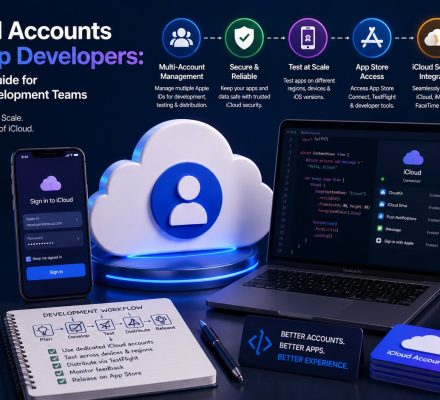
📱 How Developers Use iCloud Accounts
Another interesting answer to what are iCloud accounts used for involves software development.
Developers frequently interact with Apple accounts and cloud services during application creation and deployment.
💻 Application Testing
Developers often use iCloud accounts when testing:
- Synchronization features
- User authentication systems
- Cloud storage functions
- Notification services
- Cross-device functionality
This testing helps ensure applications function correctly across Apple’s ecosystem.
☁️ Cloud-Based Applications
Many applications rely on cloud connectivity to store data and synchronize information between devices.
iCloud provides infrastructure that developers can integrate into their software solutions.
Resources from Apple Developer Documentation explain how developers can utilize iCloud technologies within their applications.
📈 iCloud Accounts in Modern Digital Workflows
The role of cloud services continues to expand as businesses and individuals become increasingly dependent on digital infrastructure.
Today, iCloud supports numerous workflow functions including:
- Communication management
- Document storage
- Project collaboration
- Device synchronization
- Data backups
- Remote accessibility
For many users, iCloud serves as the central hub connecting multiple aspects of their digital lives.
🎯 iCloud Accounts for Online Registrations and Digital Identity
One of the lesser-known answers to the question what are iCloud accounts used for involves digital identity management. Today, almost every online service requires an email address for registration, verification, communication, and account recovery.
As a result, iCloud email accounts are frequently used as the foundation for accessing digital platforms across various industries.
🌐 Common Registration Purposes
Users may utilize iCloud accounts when registering for:
- Social media platforms
- E-commerce websites
- Business software
- Cloud services
- Educational platforms
- Subscription services
- Developer tools
- Online communities
Since email remains the primary identifier for most online services, an iCloud account often becomes the center of a user’s digital ecosystem.
📧 Account Verification Workflows
Most online platforms require email verification during registration.
A typical verification workflow involves:
- User creates account
- Platform sends verification email
- User confirms email ownership
- Account becomes activated
- Ongoing notifications are delivered
This process helps platforms validate users while maintaining communication channels for future interactions.
Organizations managing account-based operations often explore verified PVA iCloud accounts as part of broader account management and registration workflows.
📈 Why iCloud Remains Relevant in 2026
Technology evolves rapidly, yet iCloud continues to remain an important part of the digital landscape.
The reason is simple: users increasingly depend on interconnected ecosystems rather than isolated devices.
Today’s digital activities require seamless movement between:
- Mobile devices
- Laptops
- Desktop computers
- Cloud services
- Online applications
- Collaboration platforms
iCloud helps bridge these environments while simplifying user experiences.
☁️ The Growth of Cloud-Centered Computing
In the early days of computing, files and data remained stored on individual devices.
Modern computing increasingly relies on cloud infrastructure.
Benefits include:
- Anywhere access
- Automatic synchronization
- Improved collaboration
- Disaster recovery support
- Reduced hardware dependency
This shift continues to increase the importance of cloud platforms such as iCloud.
🏢 Industry Examples of iCloud Account Usage
To better understand what are iCloud accounts used for, it helps to examine how different industries leverage them.
🎨 Creative Professionals
Designers, photographers, video editors, and content creators frequently use iCloud for:
- Photo storage
- Asset synchronization
- Project backups
- Client collaboration
- Cross-device workflows
🏥 Healthcare Organizations
Healthcare professionals often rely on secure communication, scheduling, and document access.
Cloud-based systems help support:
- Appointment coordination
- Administrative workflows
- Remote accessibility
- Device management
🎓 Educational Institutions
Schools, universities, and training organizations increasingly depend on cloud technologies.
iCloud can support:
- Student collaboration
- Assignment sharing
- Calendar management
- Remote learning activities
💼 Business Operations
Businesses use iCloud accounts for:
- Email communication
- Document sharing
- Project coordination
- Remote teamwork
- Cloud backups
Many companies integrating Apple devices into daily operations benefit from centralized cloud access and synchronization.
🚀 Future Trends Shaping iCloud Usage
The future of cloud computing will likely expand the role of iCloud even further.
Several trends are already influencing how individuals and organizations use cloud services.
🤖 Artificial Intelligence Integration
AI-powered tools increasingly rely on cloud infrastructure to process information and deliver personalized experiences.
Potential future developments may include:
- Smarter file organization
- Automated content management
- Enhanced search capabilities
- Predictive recommendations
- Workflow automation
📱 Increased Device Connectivity
The number of connected devices continues to grow.
Future users may synchronize information across:
- Phones
- Computers
- Wearables
- Smart home devices
- Vehicle systems
Cloud platforms like iCloud help make these interconnected experiences possible.
🔒 Greater Focus on Privacy
Privacy concerns continue to shape technology adoption.
Apple’s emphasis on privacy and security may further strengthen iCloud’s appeal among users seeking greater control over their digital information.
iCloud accounts support a wide range of activities, from business operations to app development and testing. If you’re planning to purchase accounts, check out our Complete Guide to Buying iCloud Accounts to understand the most important factors buyers should evaluate. Businesses looking to scale account usage should also review Bulk iCloud Accounts for Businesses for additional insights.
❓ Frequently Asked Questions
What are iCloud accounts used for?
iCloud accounts are used for cloud storage, email communication, device synchronization, file sharing, backups, account registrations, collaboration, and digital identity management within Apple’s ecosystem.
Can iCloud accounts be used for email?
Yes. Every iCloud account can be associated with an iCloud email address, allowing users to send and receive messages across Apple devices and web browsers.
Do businesses use iCloud accounts?
Yes. Many businesses use iCloud for communication, collaboration, cloud storage, file sharing, project management, and device synchronization.
What makes iCloud different from other cloud services?
Its strongest advantage is deep integration with Apple’s ecosystem, allowing seamless synchronization across iPhones, iPads, Macs, Apple Watches, and other Apple devices.
Why are verified iCloud accounts important?
Many organizations prefer verified bulk iCloud accounts because they can support structured communication, account management, registration, and business workflow requirements.
Can iCloud accounts be used for online registrations?
Yes. iCloud email addresses are commonly used when registering for websites, applications, subscriptions, online services, and digital platforms.
Is iCloud only for Apple users?
Although optimized for Apple devices, certain iCloud services can also be accessed through web browsers on non-Apple systems.
Will iCloud become more important in the future?
As cloud computing, remote work, AI integration, and connected devices continue to expand, iCloud is likely to remain an important component of the digital ecosystem.
🏁 Conclusion
Understanding what are iCloud accounts used for reveals that they are far more than simple cloud storage accounts. Today, iCloud supports communication, backups, device synchronization, collaboration, online registrations, digital identity management, and business operations across countless industries.
For individual users, iCloud simplifies daily digital activities by keeping information synchronized and accessible. For organizations, it provides cloud-based infrastructure that supports productivity, communication, and collaboration.
As cloud technologies continue evolving, iCloud will likely play an even larger role in connecting devices, applications, and users within Apple’s ecosystem. Whether managing photos, sharing documents, coordinating projects, or handling online registrations, iCloud remains one of the most widely recognized cloud platforms in the world.
Organizations seeking scalable account resources often evaluate solutions involving verified iCloud accounts to support account management, communication systems, and operational workflows. With its strong ecosystem integration, security features, and cloud-based capabilities, iCloud continues to serve millions of users and businesses worldwide.